



Modern businesses face constant change, from shifting customer needs to evolving workforce expectations. Flexible office solutions provide a way to adapt quickly, control costs, and maintain productivity in a competitive environment.
Understanding Flexible Office Solutions
Flexible office solutions refer to workspaces that allow companies to adjust their space usage as their needs grow or shrink. This includes shared offices, private office suites, and temporary meeting areas that can be scaled on short notice.
Unlike traditional leases that lock businesses into long-term commitments, flexible spaces support agility. This approach suits startups, remote teams, and established companies seeking satellite locations.
Why Flexibility Matters for Growth
Scalability is essential for businesses aiming to grow efficiently. When a company can expand its workspace without major disruptions, it saves both time and resources. Flexibility also helps manage uncertainty, allowing teams to focus on innovation and customer service rather than logistical hurdles.
Many organizations find that working in a shared environment encourages collaboration and access to new opportunities. Spaces designed for networking and community can spark partnerships that fuel faster growth.
Benefits of a Coworking Environment
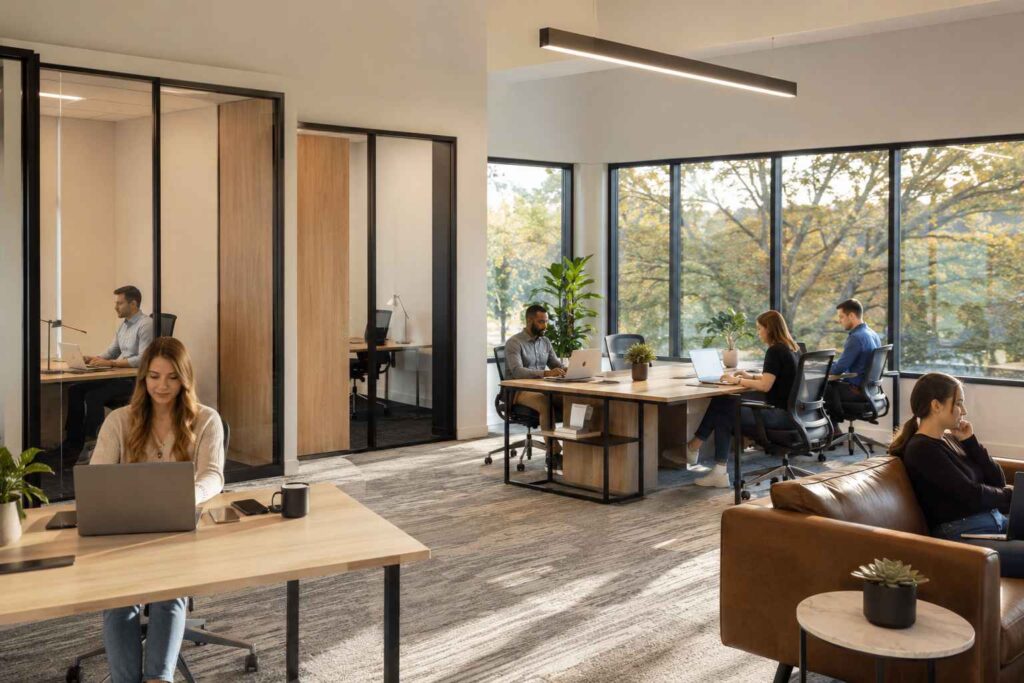
Flexible offices often take the form of coworking spaces, where companies share amenities while maintaining their independence. A well-designed coworking space supports productivity and professional networking at the same time.
- Cost efficiency through shared resources
- Access to modern infrastructure without upfront investment
- Opportunities for collaboration and knowledge exchange
- Shorter setup times compared to traditional offices
- Improved employee satisfaction through dynamic work environments
For example, businesses using a coworking space in Calgary can enjoy flexible lease terms while benefiting from a professional setting that fosters creativity and focus.
How Flexibility Supports Different Business Stages
Each stage of a business can benefit differently from flexible office solutions. Startups often appreciate the ability to scale up rapidly, while established enterprises may value the option to downsize or relocate as market conditions change.
Startups and Small Teams
New ventures need affordable and adaptable workspaces. Flexible offices reduce overhead, letting startups allocate funds toward product development or marketing. The option to upgrade space as the team grows prevents disruptions that often occur during relocation.
Growing Companies
When a business begins scaling operations, it may need more space for staff, meetings, and client interactions. Flexible offices enable this expansion smoothly. Companies can add or reduce space as needed, ensuring they pay only for what they use.
Established Enterprises
Large organizations benefit from flexible options when opening branch offices or testing new markets. Instead of committing to long leases, they can trial locations and assess performance before making long-term decisions.
Financial Advantages of Flexibility
Cost management plays a critical role in sustainable growth. Flexible office solutions help reduce financial pressure by eliminating expenses tied to traditional leases, such as maintenance, utilities, and furniture.
Predictable monthly costs make budgeting simpler. Businesses can also avoid capital expenditures on infrastructure, redirecting funds toward growth initiatives like technology, talent acquisition, or marketing campaigns.
Creating a Productive Work Environment
Workspace design influences employee engagement and performance. Flexible offices often include open areas, private rooms, and quiet zones that cater to different working styles. This variety supports focus and creativity while accommodating hybrid work models.
Access to communal areas promotes communication across teams, and shared amenities like lounges or cafes can improve morale. Many companies find that these environments attract top talent seeking balance and collaboration.
Technology and Connectivity
Reliable technology infrastructure is central to flexible workspaces. High-speed internet, secure data connections, and modern communication tools ensure seamless operations. Businesses can maintain productivity whether employees are on-site or working remotely.
Cloud-based systems and virtual collaboration platforms also complement flexible office arrangements, allowing teams to share information efficiently across multiple locations.
Environmental and Social Considerations
Flexible offices often promote sustainability by maximizing space efficiency and reducing waste. Shared facilities mean less duplication of resources, from furniture to energy use. This model aligns with growing corporate responsibility goals and environmental awareness.
Additionally, community-oriented workspaces encourage social interaction and support local entrepreneurship, contributing to a more connected business ecosystem.
Choosing the Right Flexible Office Solution
Selecting the right workspace requires understanding your team’s workflow, budget, and growth objectives. Consider location accessibility, available amenities, and the level of privacy or collaboration your operations need.
Before committing, evaluate how the space supports technology integration, team culture, and future scalability. The ideal solution should align with your business strategy and adapt as conditions evolve.
Planning for Long-Term Success
Adopting flexible office solutions is more than a temporary adjustment. It represents a shift toward smarter resource management and adaptability. Companies that embrace this model position themselves to navigate change with confidence and speed.
Whether expanding, consolidating, or exploring new markets, flexibility in workspace planning can significantly influence growth outcomes. For further details, businesses can use the contact us page to learn more about available options.